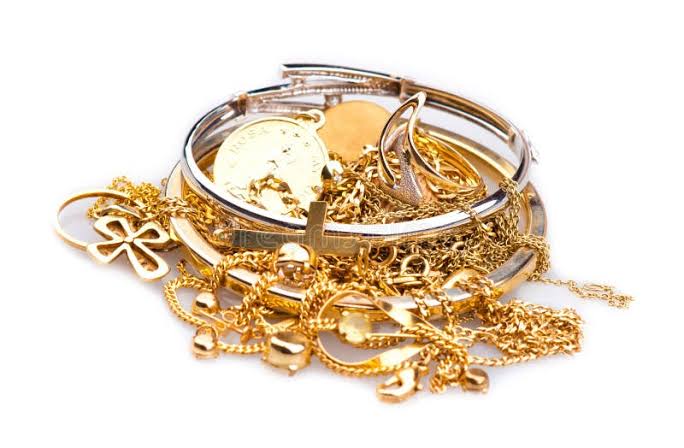
"How much is my gold worth?" It's one of the most common questions we get at The Melting Bar, and the answer is easier to figure out than most people think. All you need is the karat, the weight, and today's gold price.
This guide shows you the simple math, a quick price chart, and what to expect when you actually sell.
Karat tells you how much of your piece is pure gold. The rest is other metals like copper, silver or zinc that make jewelry stronger. Look for a small stamp inside a ring band, on a clasp, or on the back of a pendant.
Most American jewelry is 10K or 14K. 18K is common in fine and European jewelry, and 22K–24K shows up a lot in Indian and Middle Eastern pieces.
Watch out for: stamps like GF (gold filled), GP (gold plated), HGE or RGP. These pieces have only a thin layer of gold and are worth very little as scrap.
Gold is bought and sold by weight. A kitchen scale that reads to 0.1 gram works for a rough estimate. Remove stones if you can, since they add weight but aren't gold.
Gold prices are quoted in troy ounces. One troy ounce = 31.1 grams. Some buyers use pennyweight (dwt) instead: 1 dwt = 1.555 grams.
Here's the formula:
Gold price per ounce ÷ 31.1 × purity × weight in grams = melt value
Example: say gold is $3,900 an ounce and you have a 10-gram 14K chain.
Here's what each karat is worth per gram in pure metal when gold is at $3,900 an ounce. Prices change every day, so plug in today's price for an up-to-date number.
Every $100 move in the gold price changes these numbers by roughly $1.30–$3.20 per gram, depending on karat.
Melt value is not the same as your payout. Every buyer pays a percentage of melt value to cover melting, testing, and refining costs. The key is how big that percentage is.
Always ask a buyer two questions: "What karat and weight did you get?" and "What percentage of melt value are you paying?" A trustworthy buyer will answer both without hesitation.
Old, handmade, or worn pieces often have no stamp, or the stamp has rubbed off. That doesn't mean it isn't gold. A professional buyer can test it with acid, an electronic tester, or by melting and assaying it to find the exact purity.
Estimating at home is a great start. For an exact number, bring your gold to The Melting Bar on Philadelphia's Jewelers Row. We test and weigh everything in front of you, explain exactly how we got to your offer, and melt in-house for fast, accurate results.
Want more ways to boost your payout? Read how to get the most cash for scrap gold, or contact The Melting Bar today for a free quote.